

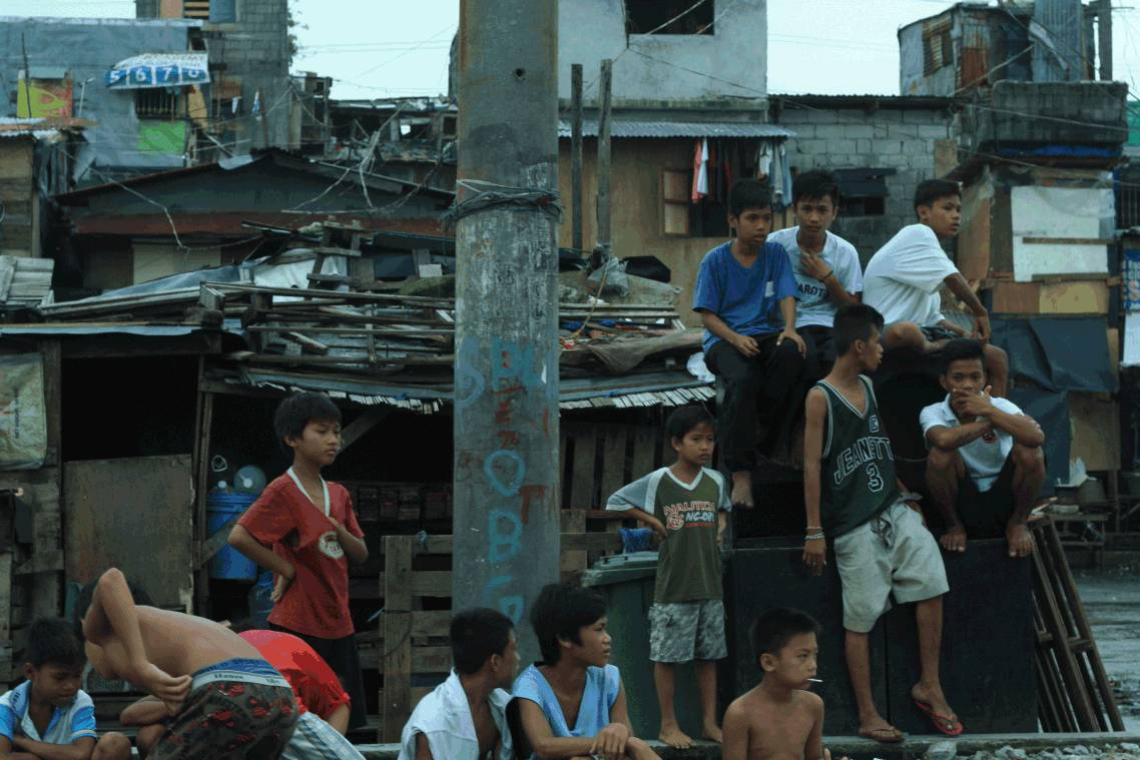
In dynasty governed regions in the Philippines, the cycle of poverty becomes almost inescapable. Political families, who have held power for generations, often focus more on preserving their own interests than on investing in the welfare of the people. Source: PIDS
Nearly four decades later, that promise remains unfulfilled. No enabling law has ever been passed, and the reason is no longer mysterious. Congress itself is dominated by the very families that would be regulated, if not weakened, by such legislation. As political scientist Maria Ela Atienza describes it: “It is in their interest to prevent the passage of an enabling law.”
This structural contradiction has allowed political dynasties to thrive uninterrupted since 1986. While anti-dynasty bills are routinely filed, they rarely move beyond committee hearings. The result is a political system where power circulates within families, not institutions, and where reform is consistently delayed by self-interest.
“It is in their interest to prevent the passage of an enabling law.”
According to 2021 data, all of the provinces within the Bangsamoro Autonomous Region (BARMM) in Muslim Mindanao, did not only record the highest poverty rate at 37.2%, but are also governed by political dynasties.
The persistence of poverty in the Philippines is often explained through geography, conflict, or lack of infrastructure. But data reveals a more uncomfortable truth: the poorest regions are also those most tightly controlled by political dynasties.
"According to 2021 data, all of the provinces within the Bangsamoro Autonomous Region (BARMM) in Muslim Mindanao, did not only record the highest poverty rate at 37.2%, but are also governed by political dynasties."
Regions such as BARMM, Caraga, Eastern Visayas, Bicol, and Zamboanga Peninsula consistently register the highest poverty incidence, and are overwhelmingly governed by entrenched political families. This pattern is too consistent to dismiss as coincidence.
Dynasties weaken accountability. When relatives occupy multiple positions across local and national offices, checks and balances erode. Elections become less competitive, public funds are distributed through patronage, and wrongdoing is more easily concealed. In these environments, poverty is not merely an economic condition, it is a political outcome.
Updated headlines for free, straight to your inbox—no noise, just facts.
We collect your email only to send you updates. No third-party access. Ever. Your privacy matters. Read our Privacy Policy for full details.
Public frustration over corruption scandals, including failed flood control projects, has forced political elites to speak more openly about reform. Even calls from the presidency to “prioritize” an anti-dynasty law have emerged. Yet words alone do not dismantle entrenched power.
Without certifying such measures as urgent or actively mobilizing legislative allies, these pronouncements remain symbolic. Watered-down proposals from lawmakers belonging to dynastic clans further highlight the gap between rhetoric and action. For many families in power, banning dynasties would mean regulating their own political survival, an outcome few are willing to accept.
One of the clearest indicators of elite resistance to reform is Congress’ repeated willingness to postpone local elections, such as barangay and youth elections. These local contests are among the most accessible forms of democratic participation, requiring less money and offering fewer advantages to political clans.
Yet lawmakers have shown far greater urgency in delaying these elections than in passing an anti-dynasty law. This imbalance suggests a deliberate strategy: limit political entry points while preserving elite dominance. The longer grassroots elections are postponed, the easier it is for dynasties to maintain control from the top down.
Against this backdrop, attention has turned to Mindanao, particularly with the growing political presence of Vice President Sara Duterte in the region. Her increasing engagement with Mindanaoan leaders, including figures in Sulu, signals how national dynasties continue to expand their influence in areas already marked by poverty and fragile governance.
While the Duterte family has long enjoyed dominance in Philippine politics, Sara Duterte’s recent alliances with influential groups like the Muedzul Sultanate suggest a strategy of broadening her regional support in Mindanao. This move is not only about securing votes but also about gaining favor with powerful local elites, especially in areas with long-standing political and cultural significance, such as the Sulu Archipelago.
Mindanao’s history of conflict and underdevelopment makes it especially vulnerable to elite consolidation. When national political figures align with local dynasties, reformist narratives risk being replaced by familiar power arrangements, reinforcing existing hierarchies rather than dismantling them.
This expanding political presence coincides with prolonged uncertainty over the BARMM elections. Proposed legislation to reset the parliamentary polls has been justified as a legal necessity following Supreme Court rulings on redistricting and Sulu’s exclusion from BARMM. Yet the repeated delays have raised concerns about whether the promise of self-governance is being diluted in practice.
"A recent proposed bill to reset the BARMM parliamentary elections to March 30, 2026 underscores the fragility of democratic processes in the region."
A recent proposed bill to reset the BARMM parliamentary elections to March 30, 2026 underscores the fragility of democratic processes in the region. While the measure is framed as a necessary legal fix, following Supreme Court rulings on redistricting and Sulu’s exclusion, it also prolongs governance by an unelected interim authority.
For a region built on the principles of self-determination and autonomy, repeated delays in elections undermine public trust. Without regular, credible polls, political families and appointed officials continue to wield power without direct voter consent, deepening perceptions of exclusion and inequality.
Political dynasties are not merely a governance issue, they are a poverty issue. Where power is inherited rather than earned, public service becomes private property, and reform becomes optional. Mindanao’s experience, particularly in BARMM and Sulu, shows how delayed elections, elite alliances, and unresolved historical claims converge to keep communities poor.
The long-running claim by supposed heirs of the Sultanate of Sulu against Malaysia, ultimately unsuccessful, offers another lesson in how history, identity, and power intersect. While rooted in colonial-era agreements, the case became entangled in elite legal and political maneuvering, raising expectations that were never realistically attainable.
"The long-running claim by supposed heirs of the Sultanate of Sulu against Malaysia, ultimately unsuccessful, offers another lesson in how history, identity, and power intersect."
Its failure left ordinary Tausugs with little to show but renewed frustration. Like dynastic politics, such cases illustrate how symbolic claims can distract from urgent needs: education, healthcare, livelihoods, and accountable governance.
Ending this cycle requires more than constitutional ideals. It demands political courage, competitive elections, and sustained public pressure. Until dynastic power is meaningfully challenged, poverty will remain entrenched, passed down, much like political office itself, from one generation to the next.
REFERENCES
GMA Integrated News. (2026, January 18). Zubiri files bill to reset BARMM polls on March 30, 2026. GMA News Online. https://www.gmanetwork.com/
Inquirer. (2026, January 13). Stark relationship: Poverty persists where dynastic power endures. Inquirer. https://newsinfo.inquirer.net/
Know Sulu. (2025, December 30). Mindanao's Struggle for Identity: A Call for Independence and the Shadow of the Sulu Heirs Case. Know Sulu. https://knowsulu.ph/
Know Sulu. (2025, December 10). D-Day for the Sulu lawsuit: Malaysia triumphs over the heirs in $14.9 billion arbitration award. Know Sulu. https://knowsulu.ph/
Know Sulu. (2025, June 19). Isolated or independent? The new ambiguity of Sulu's position outside of BARMM. Know Sulu. https://knowsulu.ph/

KnowSulu is your trusted source for verified facts, news, and legal insights about the Sulu region. Committed to integrity, our mission is to empower the people of Sulu by providing accurate, transparent, and reliable information that matters.