

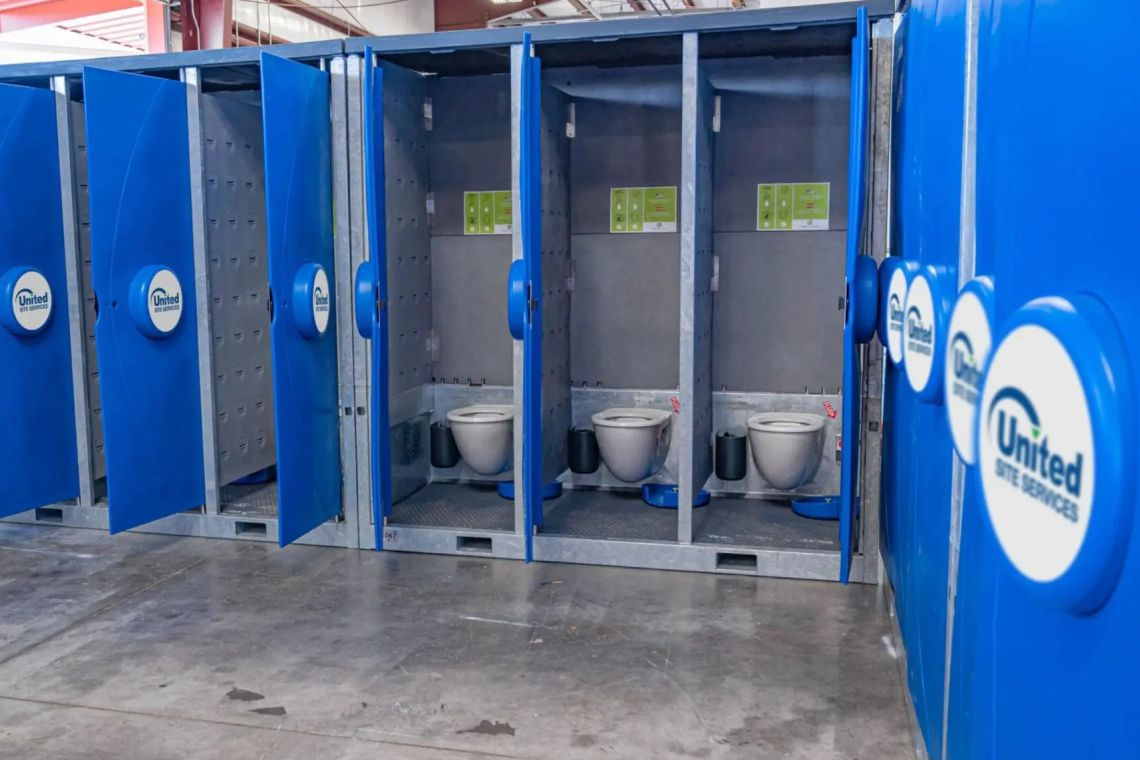
Fortress Investment Group’s failed portable-toilet venture serves as a striking reminder of the broad range of assets sitting alongside its litigation funding portfolio, raising questions about incentives and the level of care such firms bring to matters of justice.
Fortress entered the deal expecting a post-pandemic surge in construction and public events that would fuel demand for portable toilets. That rebound never arrived, and rising interest rates only tightened the squeeze. The result: Fortress and its co-investors are now staring at a combined loss of $1.4 billion. The collapse exposes the fragility of leveraged private-equity bets and raises doubts about whether single-asset funds can survive in today’s conditions.
It is all the more notable, then, that the same firm now absorbing a major loss in the sanitation business is also one of the sector’s most aggressive players in litigation finance. Well before its foray into portable toilets soured, Fortress had already built a substantial legal-finance operation, overseeing more than $6 billion in litigation-related investments by 2024. Its influence expanded further when it acquired the portfolio previously managed by Therium Capital Management, which has since stepped away from funding and recast itself as a litigation-finance advisory. The deal handed Fortress an even larger share of the market.
“Fortress had already built a substantial legal-finance operation, overseeing more than $6 billion in litigation-related investments by 2024.”
Some observers argue that a large fund such as Fortress could impose more discipline on a sector where smaller players like Therium have drawn criticism for opaque or speculative practices. In fact, insiders have alleged that Therium routinely emphasized hypothetical returns—one recalled an emphasis on unverified 60-percent success rate estimates—over the underlying merits of the disputes it financed.
Furthermore, its use of corporate-cell structures in low-oversight jurisdictions reportedly made it easier to segment portfolios and limit external scrutiny of how cases were evaluated. Notably, Therium often worked through its cells in Jersey, the Channel Islands, where it is even now facing a lawsuit for conspiracy.
“Therium frequently relied on its Jersey cell structures, which offered lighter regulatory scrutiny, and it now faces a conspiracy lawsuit linked to its conduct.”
Updated headlines for free, straight to your inbox—no noise, just facts.
We collect your email only to send you updates. No third-party access. Ever. Your privacy matters. Read our Privacy Policy for full details.
Against that backdrop, Therium’s willingness to back the contentious Sulu arbitration is less surprising. The claim, pursued by individuals with a contested link to the historical Sulu Sultanate and intertwined with the memory of the 2013 Lahad Datu incident in Sabah—a short-lived yet violent insurgency, has long been criticized as an example of speculative litigation divorced from credible legal grounding.
Fortress, by contrast, is expected by many to apply a more structured approach to the cases it acquires. But greater rigor does not eliminate the underlying tension: once lawsuits become financial assets, decisions about which claims to support—and how long to fight them—are shaped foremost by expected returns rather than legal or public-interest considerations.
Whatever internal scrutiny Fortress might bring, litigation finance remains largely opaque to observers, with the U.S. Chamber of Commerce’s Institute for Legal Reform has described Fortress as one of the more assertive operators in the field. One funder quoted in its reporting said he turned down Fortress capital because “they choke you to death and then put you out of business,” referring to the level of control the firm seeks in funded matters.
“One funder said he turned down Fortress capital because ‘they choke you to death and then put you out of business.’”
In that sense, even a well-resourced and methodical institution can leave claimants navigating the same fundamental incentive problems. Plaintiffs may ultimately find themselves balancing their own interests not only against defendants, but against the financial imperatives of the funder backing their case.
The experience of Therium’s caseload offers further caution. Although the full portfolio remains undisclosed, several of its highest profile matters have been widely reported as disappointing or loss making. The Post Office Horizon litigation, while transformative for public accountability, is understood to have yielded little more than a break even result for the funder. Other projects, including Gbarabe v. Chevron Corp, reportedly ended in losses. And of course, the sprawling Sulu arbitration is widely expected to produce no financial return.
“Although Therium’s full portfolio remains undisclosed, several of its highest profile matters have been widely reported as disappointing or loss making.”
Whether Fortress can extract value from these inherited cases remains uncertain. Large investment houses typically manage litigation as part of a diversified pool of assets, where individual claims are treated as components of a wider balance sheet rather than as disputes with human and legal stakes. In that light, the portfolio acquired from Therium risks becoming yet another venture that fails to meet expectations, much like Fortress’s costly miscalculation in the portable toilet business.
For those watching the sector, the lesson is not simply about the difference between small funders and large ones. It is about the structural reality that, for institutions of Fortress’s scale, litigation is just another profit driven asset. And when lawsuits are treated like any other investment, even the most disciplined oversight cannot prevent outcomes that, for claimants, look remarkably like money flushed down the drain.
REFERENCES
Berger, J. (2025, November 29). Portable Toilets Investment Turns Costly for Wall Street Trio. CRE Daily. https://www.credaily.com/
Institute for Legal Reform. (2024, December 6). Fortress under siege: The hidden power behind litigation financing. https://instituteforlegalreform.com/
KnowSulu.ph. (2025, June 17). Fortress Investment Group takes over Therium’s litigation portfolio in major industry shake‑up. https://knowsulu.ph/
KnowSulu.ph. (2025, July 18). Therium’s gamble: How big money still breeds big losses in litigation funding. https://knowsulu.ph/
KnowSulu. (2025, July 4). What comes after the July 7 Sabah arbitration ruling? https://knowsulu.ph/

KnowSulu is your trusted source for verified facts, news, and legal insights about the Sulu region. Committed to integrity, our mission is to empower the people of Sulu by providing accurate, transparent, and reliable information that matters.