

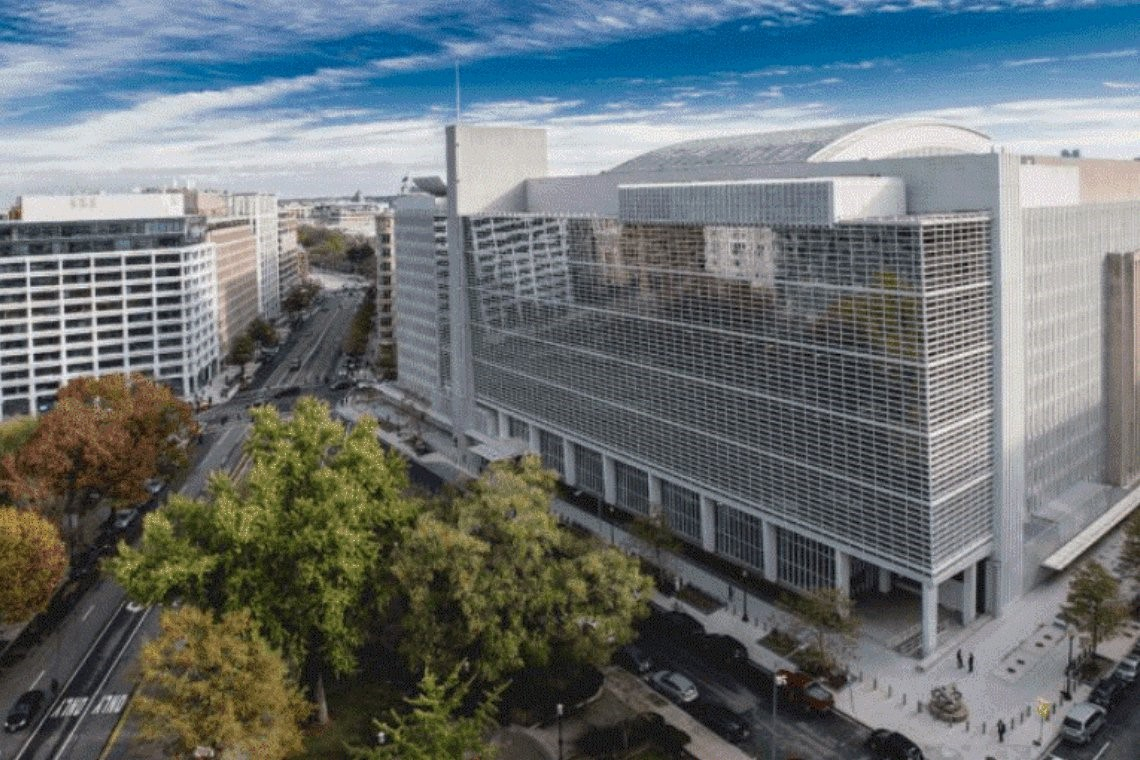
On November 24, 2025, the International Centre for Settlement of Investment Disputes (ICSID) released a redacted version of its November 6 ruling, which dismissed a claim by the heirs of the Sultan of Sulu against Spain. The claim, seeking $18 billion in damages, was rejected by the ICSID tribunal as "manifestly without legal merit," representing a major setback in the ongoing legal battle over colonial-era agreements and disputed land ownership in Southeast Asia. Source: ICSID
The claim, which sought a colossal $18 billion in damages, was deemed “manifestly without legal merit” by the the International Centre for Settlement of Investment Disputes (ICSID) tribunal. This decision marks a significant setback in the long-running legal saga involving colonial-era agreements, arbitration rulings, and contested claims of land ownership in Southeast Asia.
The Sulu heirs, represented by Paul Cohen, filed a claim with ICSID on October 24, 2024, alleging Spain interfered in their arbitration with Malaysia, violating the Philippines-Spain Bilateral Investment Treaty (BIT). They sought over $18 billion, claiming legal expenses in the arbitration were protected investments. Spain objected, arguing the claim lacked legal basis and that the costs weren’t protected investments under the BIT.
As Spains arguments read in the published award "Legal fees are expenses, not claims; they are not “utilised for the purpose of creating an economic value” but rather serve to enable participation in judicial proceedings." Furthermore, Spain argued that no economic activity or investment in Spain had taken place, and thus, the claimants’ demand for compensation was without merit.
"Legal fees are expenses, not claims; they are not “utilised for the purpose of creating an economic value” but rather serve to enable participation in judicial proceedings."
The ICSID tribunal ruled in Spain’s favor. In a unanimous decision, the tribunal concluded that the Sulu heirs’ claim failed to meet the basic requirements of the BIT. The tribunal emphasized that the legal fees and expenses incurred in the arbitration did not qualify as “investments” within the meaning of the treaty and that "none of the Claimants’ alleged investments meet the relevant requirements."
"In its ruling, the tribunal noted that an “investment” under the BIT must involve an asset capable of generating returns or a business venture, neither of which was demonstrated by the claimants."
Updated headlines for free, straight to your inbox—no noise, just facts.
We collect your email only to send you updates. No third-party access. Ever. Your privacy matters. Read our Privacy Policy for full details.
In its ruling, the tribunal noted that an “investment” under the BIT must involve an asset capable of generating returns or a business venture, neither of which was demonstrated by the claimants. The tribunal further clarified that any fees paid for the services of the arbitrator or for Spanish court expenses could not be considered investments, as they did not involve the creation of value or economic activity. Even if the claimants’ interest in the annulled award were considered, it was clear that this did not relate to an investment in Spanish territory.
The dismissal of the Sulu heirs’ claim represents a significant blow to their long-standing attempts of court hopping. The claimants had hoped to use the ICSID framework to revive their earlier arbitration efforts and to force Spain to pay for its alleged interference in the arbitration process. However, this ruling highlights that legal expenses and fees cannot be considered legitimate assets in the context of international investment law.
Moreover, the decision raises questions about the legitimacy of the broader Sulu heirs' claims. Critics of the claimants argue that the entire legal offensive, which spans multiple jurisdictions, is increasingly viewed as a desperate attempt to extract money from countries that may have no direct connection to the original dispute. With this ruling, the ICSID tribunal has reinforced the idea that treaties designed to protect legitimate investments should not be used as vehicles for litigating grievances that have little bearing on modern economic activity.
"With this ruling, the ICSID tribunal has reinforced the idea that treaties designed to protect legitimate investments should not be used as vehicles for litigating grievances that have little bearing on modern economic activity."
The November 24 published document redacted the actual number of what the Sulu heirs have to pay. But it does state in its analysis that the heirs "allege that they “invested substantial sums of money to instruct Spanish counsel (B. Cremades y Asociados) to prepare the petition to select an arbitrator before the relevant Spanish court”. Elsewhere they state that they “invested millions of dollars” in Spanish legal counsel." This highlights the financial situation the heirs are in. But the loss of the case worsens their situation.
The Sulu claimants not only lost their case but now face an additional financial burden, as the newly published document shows, the ICSID tribunal ruled that they must bear their own costs and pay Spain’s share of tribunal and administrative fees. From the beginning, they were pushed by Western lawyers and investors to pursue this complex and costly legal battle, and now they are left to bear the negative consequences, including mounting debts and further financial strain.
"[T]he ICSID tribunal ruled that they must bear their own costs and pay Spain’s share of tribunal and administrative fees."
The Sulu heirs still face numerous legal challenges related to their $15 billion claim against Malaysia, and this recent ruling could serve as a key indicator of how future cases might unfold. Given the tribunal's emphasis on the absence of any valid investment in Spain, it is likely that other international legal bodies will follow a similar line of reasoning, further weakening the legitimacy of the Sulu heirs' claims.
The decision could also influence future disputes involving historical claims, particularly those involving colonial-era agreements. As the international arbitration community watches closely, the ruling may set a precedent for how such cases are treated moving forward. The Sulu heirs may find it increasingly difficult to pursue their claims in the same manner, as courts and tribunals are likely to prioritize modern legal and economic standards over historical grievances.
This ICSID ruling is another significant setback for the heirs of the Sultan of Sulu, whose ambitious and controversial legal campaign may now be nearing its end. The upcoming December 9 decision will mark a final chapter in a protracted and contentious legal saga that has drawn international attention.
REFERENCES
International Centre for Settlement of Investment Disputes. (2025, November 25). ICSID Case No. ARB/24/45 - Award. https://italaw.com/
International Centre for Settlement of Investment Disputes. (2025). Case detail: ARB/24/45. World Bank Group. https://icsid.worldbank.org
Knowsulu. (2025, November 12). Sulu claimants' desperate $18 billion claim against Spain thrown out. Knowsulu. https://knowsulu.ph/
Mealey’s International Arbitration. (2025, November 25). International Centre for Settlement of Investment Disputes (ICSID) tribunal dismisses Sultan’s heirs’ US$18B claim against Spain. https://www.mealeys.com/

KnowSulu is your trusted source for verified facts, news, and legal insights about the Sulu region. Committed to integrity, our mission is to empower the people of Sulu by providing accurate, transparent, and reliable information that matters.